Philosophy
The word liminal comes from the Latin limen - a threshold. The anthropologist Victor Turner used it to describe the moment a person is no longer who they were, but not yet who they will become. It is a space of suspension, transition, and return.
The journeys we design are built for these moments.
I.
The Liminal Belief
Wellness is not a menu of treatments. It is attention, sleep, movement and meaning, repaired slowly and in the right order. Our work is the bridge from the familiar to the extraordinary - designed one journey at a time.
Liminal is the space where ordinary life meets profound renewal. Solitude and isolation are not the same thing. Some thresholds are best crossed alone. Others are easier crossed in company, with people who happen to be crossing something too. We design journeys that help our clients live more meaningfully, not simply longer.
To become the most trusted name in wellness travel - quietly, without spectacle, through the quality of every journey we design.
To craft private, considered journeys that give our clients what modern life has taken from them: silence, space, slow time, and the deliberate absence of everything optional.
Luxury is not more. Luxury is what remains when everything unnecessary has been removed. Empty hallways. Unrushed meals. A window that opens onto a landscape no algorithm has surfaced for you. The freedom to arrive unrecognised and leave unrecorded.
Silence is the last luxury left - and it is the one we design around.
Wellness and wellbeing are inextricably linked. We do not separate the body from the life it lives. A Liminal journey begins with an outcome - better sleep, lower inflammation, longer life, real disconnection, awe, recovery, return - and the design follows from there. Destinations, rooms, practitioners and pace are all consequences of the outcome, not the starting point.
II.
A Note from Max
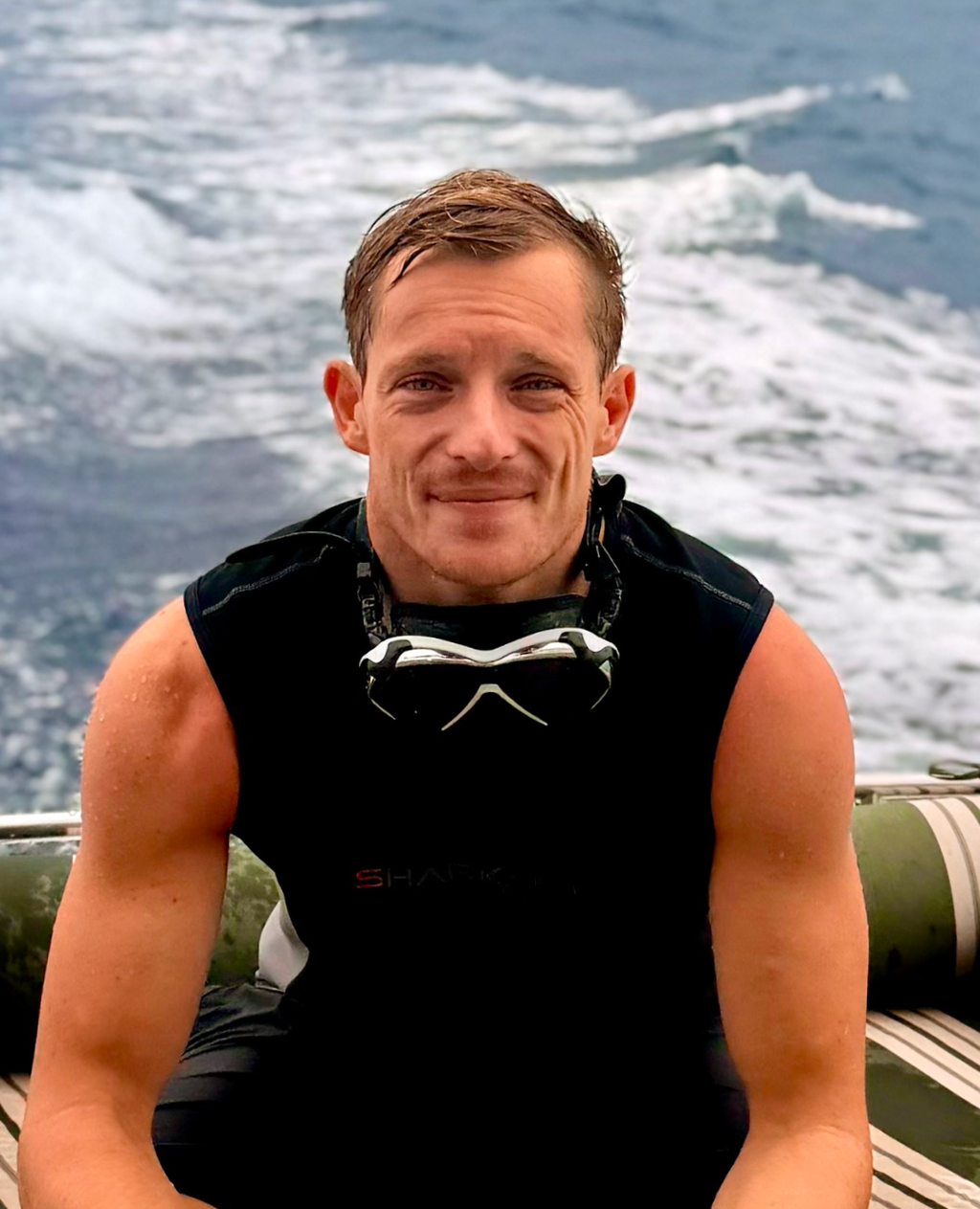
I have spent most of my life travelling toward the unfamiliar. I was fortunate to see a great deal of the world young, alongside my family - beautiful places, and with them the habit of paying close attention to where I was. German by birth, shaped by years of study in the UK and twelve in London, I now live in Bangkok - a city where emptiness is a rumour more than a principle.
The journeys that changed me were never really about the hotel. They were four weeks on a social project deep in the Ecuadorian rainforest, years spent living in the Middle East, and six weeks in Raja Ampat, where I watched the sun come up over the water every morning until the place stopped being somewhere I was staying and became something I understood. The room mattered, but only ever as a way to be closer to where I was.
That is what Liminal designs around now. I celebrate places that celebrate where they are; that draw on their own landscape and customs instead of shutting them out. The finest houses have their place in this, and we work with them closely. But real wellness is more personal than any category or price: it is the morning, the water, the sense of being somewhere that could be nowhere else.
You speak to me from the first conversation to the shape of the final journey. I am the person who holds your design, from the first idea to the last transfer home. A small team behind me keeps every moving part precise and without fuss, with one number answered around the clock for as long as you are away.
— Max, Founder
III.
How We Design A Journey
A long, quiet conversation - usually more than one. What you are stepping away from, what you want on the other side, what your body and your calendar will honestly allow. Sleep, sickness, grief, return, anniversary, reinvention - every journey begins with a reason, and we do not start designing until we understand it. If we are not the right studio for what you need, we say so here, not later.
Then the work goes quiet for a while. We test routes and seasons, speak with properties, practitioners, skippers and guides, and check what is actually available rather than what is advertised. What comes back to you is a proposal written as a document, not a brochure: one journey, one direction, the reasoning shown. No options we do not believe in - where there are two ways to do something, we tell you which one we would take, and why.
We adjust until it is right - rooms, routing, pace, the order of the days. This is where the detail lives: how many empty days follow a clinical programme or a week at sea, who you see and in what order, where the rest sits relative to the effort, the books that arrive before you do. Refinement ends when you stop wanting to change anything - not when we do.
From the first transfer to the last flight home, the journey is held. Every confirmation is re-checked before you land. Every property, practitioner and crew knows who is arriving, and why. Weather, delays and the unexpected are absorbed before they reach you - and when they cannot be, a single 24/7 Liminal number is answered by someone who already knows your file. Done well, you notice the holding least when it is working hardest.
IV.
How we work, commercially
Our fee structure is built so the incentives sit where they should - with the quality of the journey. A single booking - one property, one stay - carries no design fee at all. A single-country journey carries a design fee of 2.5% of the journey's value. A multi-country journey - the full architecture of the studio - up to 5%. And the fee is credited in full against any component we book for you on net terms, so on most journeys it is absorbed into the journey itself.
For components we book on your behalf - hotels on net terms, chartered yachts, private rail, expedition vessels - we contract with the supplier at net rates and quote you an all-in price. We act throughout as your disclosed agent: the supplier is named in your booking confirmation, the supplier performs the service, and our role is design, negotiation and payment. Where a supplier instead pays a standard commission, that commission sustains the studio. Nothing is marked up in your direction without being shown to you.
This is a deliberate structure. It keeps our advice clean - we recommend what is right for the journey, not what pays us more - and it reflects what Hong Kong law requires of us. Suppliers see the same behaviour: clean briefs, honest lead times, and guests who arrive prepared.